Wednesday, September 30, 2015

Finally! Finshed with yet another project!

I feel so relieved after finishing the Elements in the Stars project. Overall, I thought that this project was interesting because I like learning about space. I learned how to figure out a stars location, what a emission spectrum is, and that most stars are made up of hydrogen and helium. There were many websites that helped me with this project including one for finding all the information about the stars except for the chemical (Stellar Database). I then used the spectral class letter to look at the chart on the Astronoo website to figure out the chemical make up of the star. Finally, I used another website to find the Visible Spectra of the elements as my emission spectrum. In total, this project was not that difficult to complete and I am very thankful we do not have to write an essay over this topic!
Mission Complete!
http://tse4.mm.bing.net/th?id=OIP.Mbd840f8ae46b67a1b82a5e318cc3cf07H0&pid=15.1

Monday, September 28, 2015

Starting The Forensic Archeology Lab

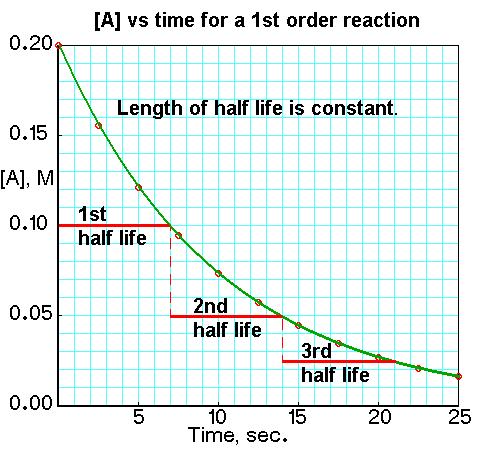
Today, we took notes on the subject of half lives, did some practice problems, and applied the knowledge into a lab. This lab demonstrated the radioactive decay process of half-lives and gave up a tangible example of the concept. My partner and I started the lab by drawing 24 by 24 squares on a piece of paper and cut them out. We discarded 9 boxes so we were left with 576 little square papers. That was definitely time consuming and tedious. Next, we placed all the squares in a cup and mixed them up and dumped them out onto the lab counter. All the squares that landed pattern side up were counted as the decayed material and the white side represented the material that was left. We counted both sections and recorded the number in the data table. After that, we discarded all the decayed atoms and used the white atoms and repeated the steps again until we reached 6 half-lives. This lab took a long time, but it helped me fully understand the concept of half lives. With the information gained from this lab, I hope I will do well on the half-life portion of the exam.
http://www.cigars4dummies.com/uploads/How_to_save_paper.jpg


http://www.chem.purdue.edu/gchelp/howtosolveit/Kinetics/KineticsArt/A_vs_t_1st_order.JPG
If you are still having trouble calculating half-life or understand the concept, watch this half-life video and it will definitely help! Also, the SoftSchools website is good tool if you want to take practice tests and quiz yourself on half-life problems! Good luck!

Thursday, September 24, 2015

Beanium Lab!

Today we got to do the Beanium lab! First, we had to answer the pre-lab question (we had to read the lab procedure the night before) using the plickers which was very easy. Then we got to go to the back of the room and pick a station. We separated the beans into the different colors and counted the total number of beans in each section. Then we took each group of beans and measured the mass of each "isotope". We then calculated the % abundance and the average mass of the isotopes. After taking in all the information we could, we calculated the average atomic mass of all the isotopes. Pictures of our lab are included below:
My picture

My picture


My picture

My picture

My picture

Radio decay notes and activity

Today in class we learned about the three types of radioactive decay: beta, alpha, and gamma. We learned in beta decay the mass number doesn't change but the proton is increased by one, in alpha decay the mass number decreases by four and the protons decrease by two, and (lastly) in gamma decay nothing changes. Gamma decay happens during both alpha and beta reactions and is shown as light. I thought that was very interesting that gamma decay didn't change the numbers of anything because I knew that it was the most powerful form of radiation.

After taking notes on this topic, we did an activity where we pulled a card from the bag that we received. The card had the names of two elements and the starting mass number. We then rolled a dice and it would either land on beta, alpha, or gamma decay. We would show this decay on a piece of paper and keep rolling until we reached the desired element. It was very helpful in understanding the three different types of radioactive decay and helped me to remember what each one did.
My picture


Wednesday, September 23, 2015

Review of Quiz

I just finished the first quiz for this unit. It was definitely not as bad as I thought it was going to be. Going into it I felt confident as well as nervous because I had no idea what was going to be on the test. It was pretty easy with all the calculations and figuring out the neutrons, electrons, and protons. I had a little difficulty with remembering certain things from nomenclature, but I think at the end I was able to remember it. Also, I remember the general idea about the scientists that discovered different parts of the atom, but some questions on the test that related to them were a little tricky. Hopefully I did as well as I thought I did.

Wednesday, September 16, 2015

First day of Atomic Structure and Radioactivity

Today we went through the first topics about the new unit. First, we learned about Dalton's Atomic Theory. I was interesting to me how we still look at these rules that were made many many years ago. I also liked how we talked about which ones were still true and which ones were false. I had forgotten that it is not true that "all atoms of a given element are identical" because you can have different numbers of neutrons or electrons in an atom which changes how it will react with other elements. We also learned the people credited for understanding what makes up an atom. (JJ Thomson figured out the presence of the electron through a cathode ray tube experiment and Rutherfold figured out that protons and nucleus exist too through a gold foil experiment) The experiment that I found most interesting was the gold foil experiment. I think it was amazing that someone could figure out the presence of a nucleus and protons based on the fact that some alpha particles made it through the atom and others bounced back.
http://images.tutorvista.com/cms/images/81/thomson-model.png
http://education-portal.com/cimages/multimages/16/rutherford-atomic-model.jpg

After the lesson, we completed an entertaining activity. There were these flat containers that had a pattern inside. There was a ball in the inside of the container and you had to move the object around and guess the shape of the inside. Some were very easy and others were rather frustrating to complete. I was a fun activity and I am glad we did it because it took my mind off school for a little bit and allowed me to do what I like best: solving puzzles!

Tuesday, September 15, 2015

Radioactive Decay Pre-Test Thoughts...

So, I just finished taking the pre-test for this upcoming unit, and I think I might have gotten around 10 right. I guessed on almost all of the test because we had not learned any of it yet! I was so lost! I knew about 10 questions, so hopefully I got those correct at least. Overall, this test was really hard to take without knowing the information first. This was as expected however. Our teacher does not expect us to know any of the information yet. It was just to get a baseline score.

I think that this unit will be very interesting because of the rock pile (by our school) has a history with radioactivity from the making of the atomic bomb during WWII. It will be exciting to learn what radioactivity actually is and how scientists can use this to our benefit. In additon, learnign the atomic sturctures in atoms will help me later in this class when we have to do more complex math that relates to chemistry. I do expect this unit to be harder than the last one, but I know that if I study well, I will be okay.